Air sealing and insulation upgrades that stop heat loss, eliminate ice dams, and cut your energy bills. Blown-in, spray foam, and fiberglass options for every home and budget.
The attic is responsible for more wasted energy than any other part of a typical central Illinois home. Heat rises. In a house with thin or missing attic insulation, that heat moves straight through the ceiling, into the attic, and out through the roof. Your furnace works harder, your bills go up, and the rooms directly below the attic stay uncomfortable no matter where you set the thermostat.
In summer, the problem reverses. An uninsulated or under-insulated attic in Mattoon or Champaign can reach 140 to 160 degrees on a July afternoon. That heat radiates down through the ceiling into your living space, forcing your air conditioner to run constantly. Rooms on the second floor or directly below the attic are always the hottest rooms in the house.
The current Illinois energy code requires R-49 in attic ceilings for Climate Zone 5, which covers the entire Mattoon-Champaign-Decatur corridor. R-49 means approximately 14 to 15 inches of blown cellulose or 16 to 20 inches of blown fiberglass. Most homes built before 1980 in this region have R-19 or less. Many have as little as R-7, which is a single layer of thin fiberglass batts with visible ceiling joists. If you can see the tops of your ceiling joists when you look into your attic, your insulation is well below code.
Insulation Service LLC has been upgrading attics across central Illinois since 1974. We do not just add insulation. We air-seal the attic floor first, then insulate to the correct depth with the right material. That sequence matters, and it is the difference between a noticeable improvement and a marginal one.
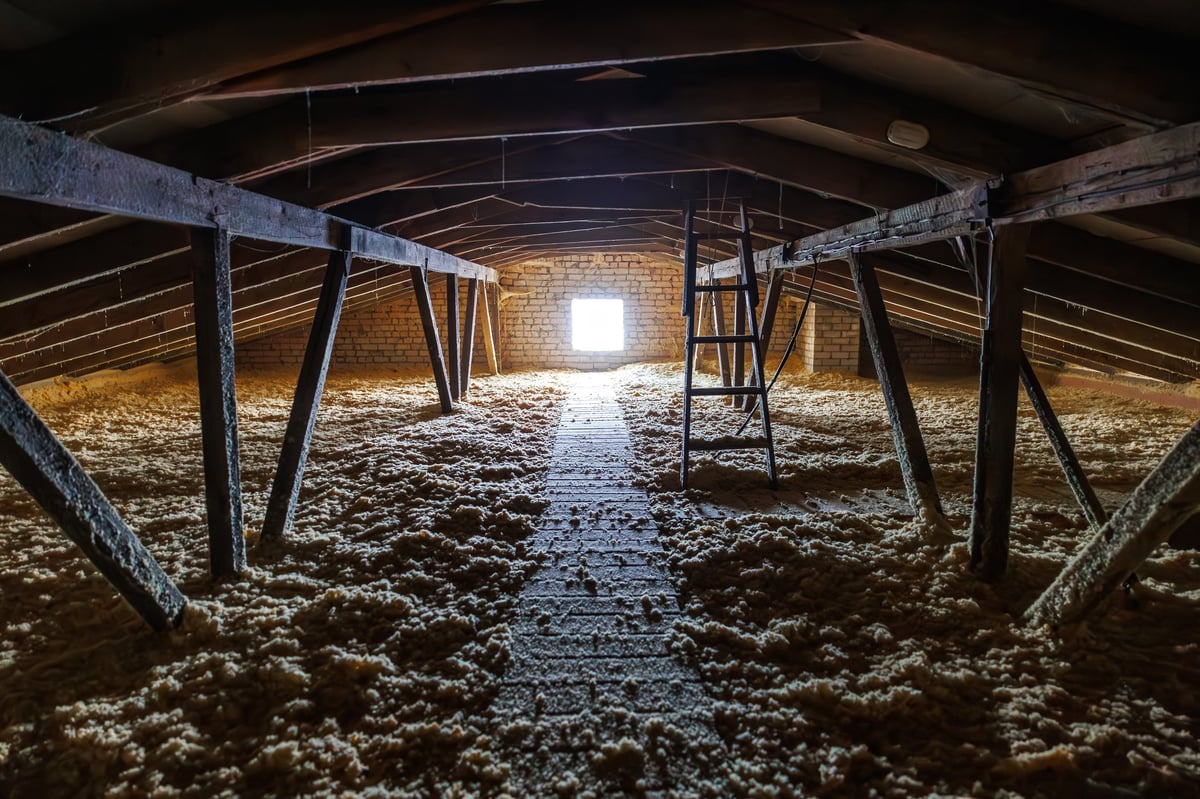
Most homeowners think of insulation as the fix. It is half the fix. Insulation resists heat transfer through conduction. But the majority of energy loss in an attic happens through air leakage, not conduction. Without air sealing those pathways first, adding more insulation on top is like putting on a thicker coat while leaving the zipper open.
Air sealing is the process of closing every gap and crack in the attic floor that allows conditioned air to escape from your living space into the attic. These gaps exist around electrical wires and junction boxes, plumbing vent stacks, HVAC duct penetrations, recessed light cans, the attic hatch or pull-down stair frame, chimney and flue chases, and the top plates of interior partition walls.
In an older central Illinois home, these gaps can add up to the equivalent of leaving a window open year-round. Air sealing alone can reduce heating and cooling costs by 10% to 20% before a single pound of new insulation is added.
We seal these penetrations with fire-rated caulk, expanding foam, rigid foam board, and sheet metal (for larger chases), following EPA and Building Performance Institute (BPI) best practices. We install fire-rated covers over all IC-rated recessed lights before burying them in insulation.
Once the attic floor is sealed, we install insulation to the target R-value. For most central Illinois attics, that means R-49, which requires approximately 14 to 15 inches of blown cellulose or 16 to 20 inches of blown fiberglass. If your existing insulation is in good condition (dry, clean, not contaminated by pests), we blow new material directly on top of it. If the existing insulation is degraded, moldy, or pest-damaged, we remove it before air sealing and re-insulating.
The combination of a sealed attic floor and proper insulation depth creates a continuous thermal and air barrier between your conditioned living space and the unconditioned attic above. This is the single most cost-effective energy upgrade available for most homes in this region.
Our most commonly recommended attic insulation material. Blown-in cellulose is dense, fills every gap, and resists air movement better than loose-fill fiberglass.
Best for: Attic floor upgrades in existing homes, especially older homes with irregular framing
Learn more about blown-in insulation →A strong alternative to cellulose, particularly in attics with known moisture concerns. Fiberglass does not absorb water, settles less, and is non-combustible.
Best for: Attics with moisture concerns, homeowners who prefer a non-cellulose product
Learn more about blown-in insulation →Applied to the underside of the roof deck, converting the attic into conditioned space. The right choice when HVAC ductwork is in the attic or the attic is used as living space.
Best for: Attics with HVAC equipment, finished attics, homes with chronic ice dam problems
Learn more about spray foam →For the majority of central Illinois homes with standard unconditioned attics, blown-in cellulose on the attic floor with proper air sealing is the highest-value upgrade. Spray foam on the roofline costs more but is the correct solution when the attic contains ductwork or when the homeowner needs the attic to be a usable, climate-controlled space.
Original fiberglass batts installed in the 1960s and 1970s have compressed to half their rated thickness. We remove or supplement degraded batts and blow new insulation to R-49.
We routinely find open top plates, unsealed plumbing stacks, and uncovered recessed light cans. Every gap is a conduit for heated air to escape. We seal all penetrations before insulating.
Heat escaping through the attic warms the roof deck unevenly, melting snow that refreezes at the eaves. Proper air sealing and insulation keep the roof deck cold and uniform, preventing ice dams.
Previous insulation work pushed material into the soffit bays, blocking the ventilation channel. We install rafter baffles at every bay along the eaves to maintain the ventilation channel.
Mice, squirrels, raccoons, and bats contaminate attic insulation with droppings, urine, and nesting material. We remove damaged material, sanitize affected areas, and recommend exclusion work.
We find bathroom exhaust fans that terminate in the attic in at least one out of every five attics. This causes condensation, mold, and wet insulation. We can extend the vent to the exterior.
Attic insulation costs depend on the size of your attic, the insulation material, the current insulation depth, and whether air sealing or old insulation removal is needed. Here are typical ranges for central Illinois projects:
| Project | Typical Cost Range |
|---|---|
| Blown-in cellulose, 1,000 sq ft attic (R-49) | $1,000 to $2,000 |
| Blown-in fiberglass, 1,000 sq ft attic (R-49) | $1,000 to $1,750 |
| Attic air sealing (comprehensive, prior to insulation) | $300 to $800 |
| Spray foam on roofline, 1,000 sq ft (open-cell, 5.5") | $2,900 to $4,500 |
| Old insulation removal (contaminated or degraded) | $1.00 to $2.00 per sq ft |
| Rafter baffle installation (per bay) | $5 to $15 |
For most homeowners, a complete attic air sealing and blown-in insulation upgrade costs between $1,500 and $3,000 for a 1,000 to 1,500 square foot attic. This is typically the single highest-ROI energy improvement you can make. Homeowners in central Illinois report 15% to 25% reductions in annual heating and cooling costs after a properly executed attic upgrade.
We enter your attic, measure the existing insulation depth, identify the material type and condition, photograph problem areas, check for air leaks and ventilation issues, and measure the total area. You receive a written proposal with exact pricing, typically within one business day.
On installation day, we lay drop cloths and plastic sheeting below the attic access point. We set up the blowing machine outside (typically near the garage or driveway) and run the fill hose into the attic. If your attic is accessed through a pull-down stair or ceiling hatch, we protect the surrounding area from dust.
If existing insulation is contaminated, moldy, or severely degraded, we vacuum it out with a commercial insulation removal machine. The material is bagged and disposed of. This step is not always necessary—if your existing insulation is clean and dry, we blow new material on top of it.
With the attic floor exposed, we seal every penetration: electrical boxes, wire holes, plumbing stacks, HVAC chases, recessed light cans, the attic hatch, interior wall top plates, and chimney/flue chases. This is the step that makes the insulation work.
We install rafter baffles at every bay along the eaves to preserve soffit ventilation, then blow insulation to the specified depth. We use depth markers throughout the attic to verify uniform coverage. For a typical R-49 cellulose job, we verify 14 to 15 inches of settled depth across the entire attic floor.
We re-enter the attic after installation to check for uniform depth, verify that no vents or equipment are buried, and confirm that all baffles are properly positioned. We walk you through the completed work, provide before-and-after photos, and answer any questions.
Blown-in cellulose and fiberglass are the primary materials we use for attic floor upgrades. Learn about all blown-in applications.
Blown-in insulation →When attics contain HVAC ductwork or need to be conditioned space, spray foam on the roofline is the right approach.
Spray foam insulation →After the attic, the crawl space is the second highest-impact area for insulation upgrades. Many homeowners address both in the same project.
Crawl space insulation →A detailed cost breakdown for blown-in, spray foam, and fiberglass attic insulation in central Illinois.
Read more →If you are considering spray foam on your attic roofline, this guide covers open-cell and closed-cell pricing.
Read more →If your attic insulation is thin, settled, or missing, you are overpaying for heating and cooling every month. We will inspect your attic, seal the air leaks, and bring your insulation up to R-49. One day of work. Noticeable improvement from day one. 50 years of experience. Free estimates with next-business-day scheduling.