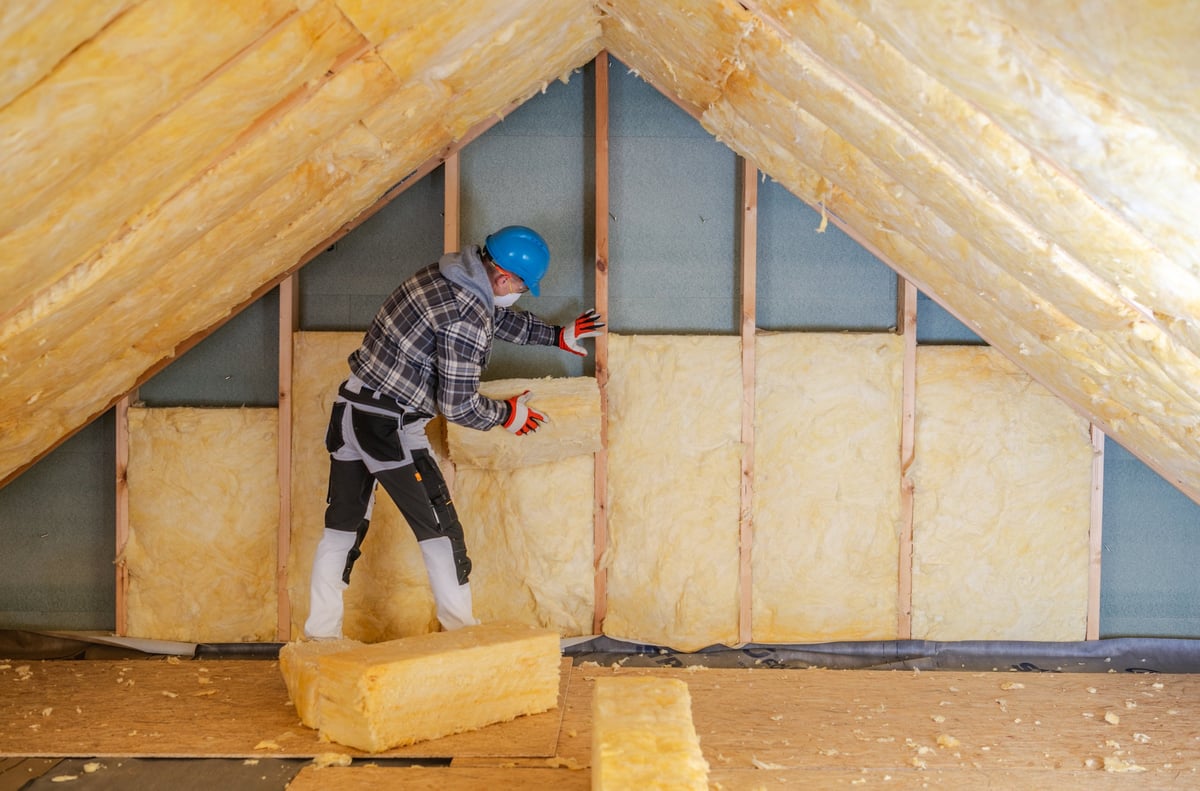
Blown-In Insulation Contractor Serving Central Illinois
Cellulose and fiberglass loose-fill insulation for attics, enclosed walls, and hard-to-reach spaces. The fastest, most cost-effective way to bring an under-insulated home up to code.
Cellulose and fiberglass loose-fill insulation for attics, enclosed walls, and hard-to-reach spaces. The fastest, most cost-effective way to bring an under-insulated home up to code.
Most homes in the Mattoon, Champaign, and Decatur corridor were built between the 1940s and 1970s. At the time, R-11 in the attic was considered adequate. Today, the Illinois energy code requires R-49 for attic ceilings in Climate Zone 5. That means the typical older home in this region has less than a quarter of the insulation it should.
Blown-in insulation is the most efficient way to close that gap. A trained installer feeds cellulose or fiberglass loose-fill material through a hose connected to a blowing machine, filling attic floors, enclosed wall cavities, and irregular spaces that batt insulation cannot reach. The material conforms to every joist bay, pipe, wire, and framing irregularity, eliminating the gaps and voids that rob batt installations of their rated R-value.
Insulation Service LLC has been installing blown-in insulation across central Illinois since 1974. We use both cellulose and fiberglass, and we will tell you which material fits your project based on the application, the existing conditions, and your budget.
Both materials are installed with the same blowing equipment, and both fill cavities effectively. But they differ in composition, settling behavior, moisture handling, and cost. Here is what matters for central Illinois applications.
Cellulose is manufactured from recycled newspaper and cardboard, ground into fine fibers and treated with borate-based fire retardants. It is roughly three times denser than fiberglass loose-fill, giving it superior resistance to air movement through the insulation layer.
| R-Value Per Inch | R-3.2 to R-3.8 |
| Density (attic) | 1.5 lb/ft³ |
| Density (wall, dense-pack) | 3.5 lb/ft³ |
| Fire Resistance | Class 1 (borate-treated) |
| Recycled Content | 80%+ |
| Typical Cost (installed) | $1.00 to $2.00 per sq ft |
Fiberglass loose-fill is manufactured from spun glass fibers. It is lighter and less dense than cellulose, which means it requires more depth to achieve the same R-value. However, fiberglass does not absorb moisture and maintains its loft over decades.
| R-Value Per Inch | R-2.2 to R-2.7 |
| Density (attic) | 0.5 to 1.0 lb/ft³ |
| Fire Resistance | Non-combustible |
| Recycled Content | 30-40% |
| Settling | Minimal (5% or less) |
| Typical Cost (installed) | $1.00 to $1.75 per sq ft |
For most attic floor upgrades in central Illinois, we recommend cellulose. Its higher density, superior air-movement resistance, and lower cost per R-value make it the stronger performer in Climate Zone 5 heating-dominated environments. For wall retrofits in homes with known moisture issues, or for attics with active condensation concerns, fiberglass is the safer material.
The highest-impact, lowest-cost insulation upgrade for most central Illinois homes. We blow cellulose or fiberglass on top of existing insulation to bring the total depth to R-49. For cellulose, approximately 14 to 15 inches of installed depth. Before we blow, we air-seal the attic floor: caulking around electrical penetrations, sealing plumbing and HVAC chases, and addressing any open framing cavities.
Learn more about attic insulation →Many older homes have no wall insulation or deteriorated batts that have slumped to the bottom. We drill small access holes (2 to 2.5 inches) through the siding at each stud bay, insert a fill tube, and pack cellulose into the cavity at 3.5 lbs per cubic foot. Holes are plugged, patched, and painted. The entire process completes in one to two days for a typical home.
Rooms above an unheated garage, cantilevered floor sections, or floor joists over an unconditioned basement lose heat downward in winter. We install netting or a rigid backer to hold the material in place, then blow cellulose or fiberglass to the specified depth. This eliminates cold floors and reduces heat loss through the floor assembly.
Bonus rooms over garages and knee wall assemblies are notorious for comfort problems. Blown-in cellulose fills these irregular cavities completely, wrapping around wiring and plumbing without leaving the gaps that batts inevitably create in non-standard framing.
Blown-in insulation only works when installed to the correct depth (attics) or density (walls). Our installers calibrate equipment for the specific material and application, and we verify depth with rulers at multiple points across the attic floor.
Insulation slows heat transfer. Air sealing stops air movement. You need both. We seal the attic floor penetrations before blowing insulation, which can improve effective performance by 25% or more. Rental machine shops do not include this step.
In vented attics, insulation must not block the soffit vents. We install baffles at every rafter bay along the eaves before blowing. This maintains the ventilation channel and prevents ice dams, which are a real concern in central Illinois winters.
The cost depends on the material, the area being insulated, the current insulation depth (if any), and whether air-sealing work is included. Here are typical ranges for central Illinois projects:
| Project | Typical Cost Range |
|---|---|
| Attic floor, cellulose, 1,000 sq ft (R-49 target) | $1,000 to $2,000 |
| Attic floor, fiberglass, 1,000 sq ft (R-49 target) | $1,000 to $1,750 |
| Attic air sealing (prior to blowing) | $300 to $800 |
| Dense-pack wall retrofit, cellulose, per sq ft of wall area | $2.00 to $3.50 |
| Old insulation removal (if needed) | $1.00 to $2.00 per sq ft |
These are installed costs including material, labor, and equipment. Your
actual price depends on your home's size, accessibility, and existing
conditions. We provide exact pricing in your free, no-obligation
estimate.
For most homeowners, blown-in attic insulation is the single highest-ROI
energy upgrade available. A well-insulated and air-sealed attic typically
reduces annual heating and cooling costs by 15% to 25%.
Blown-in insulation is one of the primary methods we use for attic upgrades. Learn about our full attic insulation process, including air sealing and old insulation removal.
Attic insulation services →For applications where air sealing and insulation need to happen in one step (rim joists, crawl spaces, rooflines), spray foam is the better choice.
Spray foam insulation →For new construction wall cavities where stud bays are open and accessible, fiberglass batts remain a cost-effective option.
Fiberglass insulation →If your attic insulation is thin, settled, or missing entirely, blown-in cellulose or fiberglass is the fastest way to fix it. We will assess your current insulation, air-seal the attic floor, and blow in the right material to the right depth. 50 years of experience. Free estimates. Next-business-day scheduling.